FAQ's About Aboriginal Art

Home » Aboriginal Art Library » Frequently Asked Questions about Aboriginal Art:


  1. What is Aboriginal Art?

Aboriginal Art refers to the traditional artwork created by the Indigenous people of Australia. It encompasses a variety of mediums including paintings on canvas, linen, bark, rock carvings, and body painting, often depicting stories from the Dreamtime.


  1. How old is Aboriginal Art?

The rock art from Aboriginal Australians is believed to be the oldest continuously practiced artistic tradition in the world, with some estimates dating it back over 65,000 years.


  1. What do the symbols in Aboriginal Art mean?

The symbols often represent different aspects of life, nature, and Dreamtime stories. For instance, a U-shape often signifies a person, while concentric circles can represent a waterhole or campsite. The meaning of the symbols will vary from region to region as well.


  1. Why are dots commonly used in Aboriginal paintings?

Dots were used to hide sacred symbols and messages. When Indigenous art began to be more commercialized, many artists started using dots to obscure the sacred designs underneath. They have become one of the most recognised features to immediately identify an art genre.


  1. How is Aboriginal Art used in ceremonies?

Art, in the form of body paint or ceremonial objects, plays a significant role in various indigenous ceremonies, helping to tell stories and convey deep spiritual beliefs.


  1. Is it okay to buy Aboriginal Art?

Absolutely! However, it’s important to ensure its ethically sourced and comes from a reputable gallery or art centre. Buying from authentic sources supports Aboriginal artists and their communities in a big way and helps the oldest continuous culture in history survive.


  1. How can you tell if the art for sale is genuine Aboriginal Art?

Look for good provenance and a certificate of authenticity. Longevity in the market. Membership with relevant associations is a great sign too. Artlandish has been in business since 2001, provides certificates of authenticity with every purchase, has hundreds of verified 5 star reviews collected directly by Google and has been a member of the Aboriginal Art Association of Australia (AAAA) for more than 20 years.


  1. What stories do Aboriginal artworks tell?

Many artworks depict stories from the Dreamtime, ancestral tales, and significant events or lessons. They can also represent the land, animals, and daily life.


  1. Are there any restrictions on exporting Aboriginal Art?

It’s always best to check current customs regulations. Generally, if purchased legally and ethically, there shouldn’t be significant issues.


  1. How has Aboriginal Art influenced modern art?

Numerous modern artists, both within and outside Australia, have been deeply influenced by the techniques, symbols, and stories found in Aboriginal Art.


11. Is it appropriate to display Wandjina artwork outside of its traditional region?

Wandjina imagery holds profound sacred significance for the Worrora, Wunumbal, and Ngarinyin Aboriginal nations of the remote Kimberley region in Western Australia. The Wandjina is their supreme creator and maker of the earth, and these three language groups are recognized as the only Aboriginal nations entitled to depict the Wandjina, a right respected by all other Aboriginal groups.​

At Artlandish, we only sell Wandjina artworks that have been:

  • Created by authorized Aboriginal artists from the appropriate Kimberley language groups
  • Painted with the proper cultural authority and permissions
  • Accompanied by certificates of authenticity verifying the artist’s cultural connection

When you purchase Wandjina art from Artlandish, you can be supremely confident that:

  • The artist has the cultural right to paint these sacred images
  • The artwork has been created following proper cultural protocols​
  • Your purchase directly supports Aboriginal artists and their communities

Displaying Wandjina artwork respectfully: We encourage collectors to treat these works with the reverence they deserve. Display them prominently as the significant cultural treasures they are, and share the story of the artist and their cultural connection with visitors to your home or office.


12. What is the history of Aboriginal dot painting? Is it traditional or modern?

This is an excellent question that helps us understand the evolution of Aboriginal art. The answer is: both traditional AND modern, dot painting represents a beautiful fusion of ancient cultural knowledge expressed through contemporary materials.​

The Traditional Roots:

Aboriginal people have been creating intricate designs for tens of thousands of years through:

Sacred ground paintings used in ceremonies

Body painting for rituals and storytelling

Sand drawings to teach Dreamtime stories

Rock art depicting ancestral journeys​

The Contemporary Evolution (1971-1973):

The modern acrylic dot painting movement began at Papunya, a remote Aboriginal settlement 240km west of Alice Springs. School teacher Geoffrey Bardon worked with senior Aboriginal men from various language groups (Pintupi, Luritja, Walpiri, Arrernte, and Anmatyerre) who had been displaced from their traditional lands.​

Bardon encouraged these artists to translate their sacred Dreamtime stories from temporary mediums onto permanent canvases using acrylic paints. This wasn’t “taught by a missionary”, rather, Bardon facilitated a process where Aboriginal elders themselves chose how to adapt their traditional designs to new materials while maintaining cultural integrity.​

Why Dot Painting?

The dot technique served multiple purposes:

  • It allowed artists to share their stories with the wider world while obscuring certain sacred elements that should remain private​
  • It evolved from traditional body painting and ground design techniques
  • It created stunning visual effects that honored the land and Dreaming stories​

The Result:

What started in Papunya became the internationally acclaimed Western Desert Art Movement. Today’s Aboriginal dot paintings are authentic expressions of living culture, ancient stories and symbols rendered in contemporary materials. The technique has been adopted across many Aboriginal art regions and continues to evolve while maintaining deep connections to Country, Dreaming, and cultural traditions.​

Our Commitment:

Every dot painting we sell comes from Aboriginal artists who are painting their own cultural stories, their own Country, and their own Dreaming, continuing a tradition that stretches back millennia, just expressed in a new medium.


13. Are the paintings from Artlandish authentic Aboriginal artworks?

Yes. Every artwork at Artlandish is a genuine, original Aboriginal artwork created by the artist listed on the certificate. Each piece comes with a Certificate of Authenticity (CoA), which guarantees the artwork is an authentic creation by the stated artist and not a reproduction or copy.

The certificate confirms important details such as the artist’s name, community, artwork title, size, medium, and Dreaming or Story. It is often signed by the artist or an authorised representative from an art centre.

A Certificate of Authenticity also ensures the purchase supports ethical art practices, helping to protect the artist’s cultural heritage, confirm the artwork’s provenance, and ensure the artist and their community are fairly paid for their work.

14. Do you sell prints or only original artworks?

All artworks at Artlandish are 100% originals. We don’t sell reproductions or prints. Each piece is a genuine, one-of-a-kind creation that carries the artist’s heritage, story, and individual expression, making every purchase something truly special and irreplaceable in both cultural and artistic value.


15. Why do some Aboriginal artworks look similar?

Each Aboriginal artist paints Dreamings or Stories that belong to their family, language group, and Country. These Dreamings have been passed down through many generations and carry deep cultural and spiritual meaning.

Because artists can only paint the Dreamings they have inherited or been given permission to share, you may see artworks by the same artist that appear similar in design, story, or theme. These are not copies or prints but original pieces that express the same ancestral story in unique ways.

While the Dreaming itself never changes, artists may choose to represent it in different sizes or colour tones. This allows them to share their personal interpretation or highlight different aspects of Country and experience, while always staying true to the same cultural story. It also means every piece is a unique part of over 60,000 years of continued culture.


16. What mediums are the artworks painted with?

The artworks are created using either acrylic paint or natural ochres on canvas or linen, occasionally bark or wood or something else but that’s rare. The choice of medium often depends on the artist’s region and cultural traditions.

For example, many artists from the Kimberley and Arnhem Land regions continue to use natural ochres, reflecting the ancient painting practices of their ancestors. Artists from the Central and Western Desert regions commonly use acrylics, which allow for vibrant colours and fine dot work that suit their contemporary storytelling styles.

Each medium holds its own cultural and artistic significance, connecting traditional knowledge with modern expression.


17. How long did it take the artist to paint this?

Every artwork is the result of many hours, often weeks, of patience, focus, and deep cultural connection. Aboriginal artists paint with extraordinary attention to detail, layering symbols and patterns that tell stories passed down through generations.

The time it takes varies depending on the size, complexity, and technique of the piece, but each one represents a huge personal and cultural commitment. Every dot, line, and colour choice is part of the artist’s storytelling. It’s not just painting, it’s preserving culture.

Some artists who paint with ochre insist on digging it from the ground and mixing it themselves. So a lot of time and effort goes into this stunning creations.


18. What’s the story behind the artwork?

Each Aboriginal artwork comes with its own Dreaming or Story, explaining its meaning, symbols, and cultural significance. The full Artwork Story and Artist Biography are included on every product page of our website and also shared on our Facebook and Instagram pages.


19. Is this real? Is this Aboriginal Art?

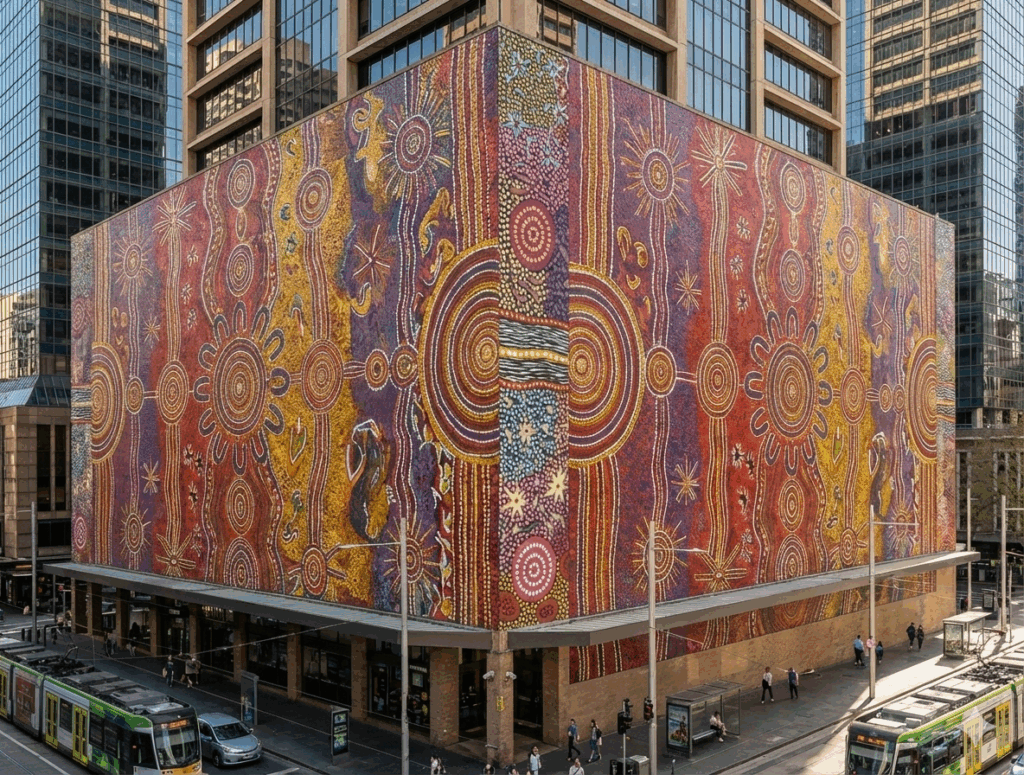
This is not real, this is AI generated. It’s very cool looking and it could be done for real but boy would that take some time to complete. It would take years for an artist to paint something of that size and detail.

Your Cart